Little Big Brain

Little Big Brain

Little Big Brain

The cerebellum contains
80% of the brain’s neurons, but constitutes only

10% of brain mass

Brain Behav Evol. 2018; 91(3): 158–169

​https://www.karger.com/Article/FullText/489943

John and Cho are talking about the following article:
Woman of 24 found to have no cerebellum in her brain

In this post the dialogue is realised by an interaction of virtual characters, for more information please check the page “Virtual characters

John

So we know the brain isn’t just “neurons”

Today 15:41   

Cho

Indeed, there are many different types, with different functions      

Today 15:42

John

Describing the brain as “neurons” would be like describing the body as “cells” 🤭

Today 15:43   

Cho

Exactly, well said!  😉                                                                                 

Today 15:43

John

So we do talk quite a bit about various types of neurons and Glia cells

Today 15:44   

Cho

Very good, that should be informative                                                   

Today 15:44

John

What should we mention besides Interneurons , pyramidal cells , and rosehip neurons ?

Today 15:44   

Cho

Oh, but you’re forgetting all about the cerebellum! Purkinje and Golgi cells  

Today 15:45

John

Oops! You’re absolutely right, we were too much focused on the cerebrum 😊😊

Today 15:45   

Cho

That’s what most people do, they assume “brain” is actually just the two main hemispheres                                                                      

Today 15:46

John

Thanks for reminding us there’s more 😊

Today 15:47   

Cho

No problem  😉                                                                                          

Today 15:47

John

But we’re not going to go into too much detail about the brainstem in this article

Today 15:48   

Cho

Fair enough, can’t do everything  😉                                                      

Today 15:48

John

We do mention that the brain is mostly fat and water … 🧠

Today 15:49   

Cho

Well, that’s not very helpful …  most types of cells are ..                     

Today 15:49

John

… to introduce our next article topic: myths about the brain 🧠

Today 15:50   

Cho

Ah!   Yes, I see why you would mention it then 😄                               

Today 15:51

John

“We only use 10% of our brain”

Today 15:51   

Cho

🙄🙄🙄                                                                                                       

Today 15:52

… Continue to read the conversation between John and Cho 
on Saturday 29th May…

1 Star2 Stars3 Stars4 Stars5 Stars (4 votes, average: 4.25 out of 5)
Loading...

Related post

A Brainful of Consciousness

A Brainful of Consciousness

A Brainful of Consciousness

Consciousness

…This is the castle keep, the central redoubt, the core essence of true mentality, many will argue, and it has so far escaped any plausible reconstruction in neurocomputational terms

​Churchland 1994, 212

John and Cho are talking about the following article:
Early Ideas on the Localization of Vital Functions

In this post the dialogue is realised by an interaction of virtual characters, for more information please check the page “Virtual characters

Cho

So here is a list of examples of people who thought they could find the exact spot where consciousness is located in the brain

Today 15:40

Cho

Longet thought it would be in the corpus callosum, Drelincourt in the cerebellum, Lotze and Herbart in the pons

Today 15:41

John

Cool! We didn’t have Lotze and Herbart, I think I might add those …

Today 15:41   

Cho

Be sure to check in with my student, she might have more information for you                                                                     

Today 15:42

John

Certainly, I’ll acknowledge her in the article if I use her paper 😊

Today 15:43   

Cho

Good! They all tried to put consciousness in some unique, asymmetrical part of the brain                                                            

Today 15:43

John

Yeah, like Descartes with the pineal gland 😊

Today 15:44   

Cho

There still are people trying to do that, you know. Churchland wrote a whole Book about it                                              

Today 15:44

John

I don’t think we have him in the list … 🤔

Today 15:44   

Cho

He proposed that consciousness would be located in the intralaminar nucleus                                

Today 15:45

John

I’ll jot that down now, can you mail me the precise reference later?

Today 15:45   

Cho

Sure, no problem. 😊                                                                                

Today 15:46

John

This has been very helpful!

Today 15:47   

Cho

So what’s next?  😊                                                                                    

Today 15:47

John

We’ve got an article on what the brain is actually made of

Today 15:48   

Cho

Oh, good one, people make the weirdest assumptions about that  

Today 15:48

John

Yes, they do!

Today 15:49   

Cho

Like it would all just be neurons …  😊                                                   

Today 15:49

… Continue to read the conversation between John and Cho 
on Saturday 22nd May…

1 Star2 Stars3 Stars4 Stars5 Stars (4 votes, average: 4.25 out of 5)
Loading...

Related post

The Mental Node

The Mental Node

The Mental Node

My view is that this gland is the principal seat of the soul, and the place in which all our thoughts are formed.

…The reason I believe this is that I cannot find
any part of the brain, except this, which is not double.

Descartes 29 January 1640

John and Cho are talking about  Consciousness 

In this post the dialogue is realised by an interaction of virtual characters, for more information please check the page “Virtual characters

John

Hi Cho, can I ask your help for something?

Today 15:38   

Cho

Sure John, what’s up? 😊                                                                          

Today 15:40

John

I’m working on a series of articles on the brain for a magazine …

Today 15:41   

Cho

Nice! 😊                                                                                                       

Today 15:41

John

… and I just wanted to do some fact-checking

Today 15:42   

Cho

OK, what can I do for you?                                                                        

Today 15:42

John

So the first article is about consciousness

Today 15:43   

Cho

Oh, interesting, I recently had a conversation with a student about that                                                                       

Today 15:43

John

Good, so the topic is whether we can localize consciousness in the brain 

Today 15:44   

Cho

Ha, I don’t think so!                                                                                    

Today 15:44

John

That’s the conclusion of the article as well, but we want to show why people weren’t crazy to think that it could be done

Today 15:44   

Cho

Fair enough, but what are you basing that on?                                     

Today 15:45

John

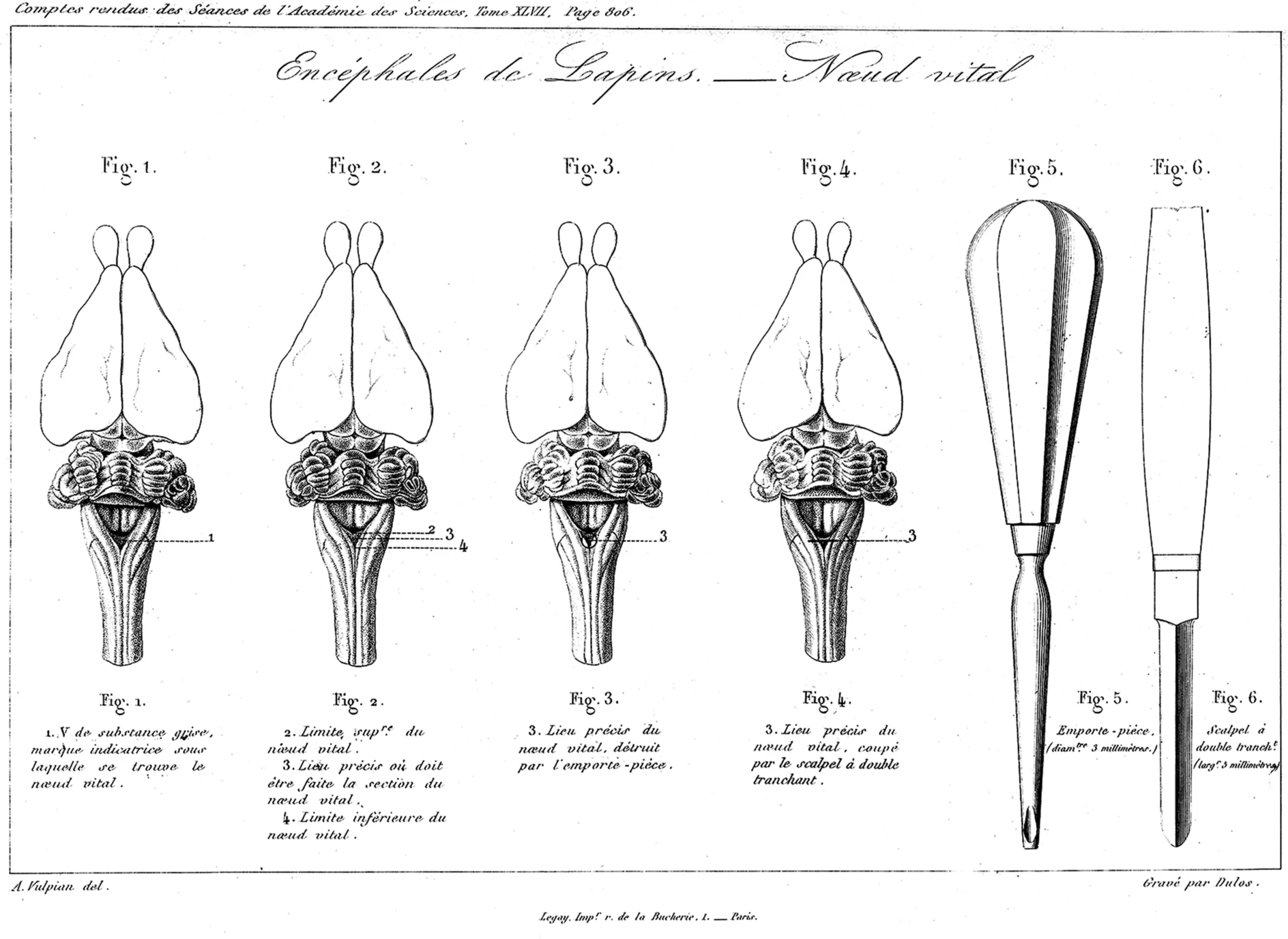
Well, we start in the 19th century when people like Flourens were trying to find the “vital node”

Today 15:45   

Cho

I remember reading about that in an intro class, he just started cutting in the brainstem of rabbits!                                    

Today 15:46

John

Yep, to see what would happen, until he found one spot where the animal stopped moving completely

Today 15:47   

Cho

My kids would kill me if I did work like that …  😄                                

Today 15:47

John

Sure, stuff like this isn’t really justifiable anymore, but he thought he had found something really fundamental

Today 15:48   

Cho

My student had a whole list of people trying to find something like that by various means                                                

Today 15:48

John

Interesting! Do you remember who? We might include some more examples …

Today 15:39   

Cho

Sure, let met pull up the paper she wrote …  😊                                  

Today 15:49

… Continue to read the conversation between John and Cho 
on Saturday 15th May…

1 Star2 Stars3 Stars4 Stars5 Stars (4 votes, average: 4.25 out of 5)
Loading...

Related post

Total posts on the argument

A Healthy Brain is a Joy Forever

A Healthy Brain is a Joy Forever

A Healthy Brain is a Joy Forever

{

Hippocrates

Men ought to know that from the brain, and from the brain only, arise our pleasures, joys, laughter and jests, as well as our sorrows, pains, griefs and tears. […]
And by the same organ we become mad and delirious, and fears and terrors assail us […]

All these things we endure from the brain, when it is not healthy

(c. 460 B.C. – c. 370 B.C.)

Introduction

Long before we knew what it was for, we already knew things could be wrong in the brain. We have archeological evidence of brain surgery performed “since prehistoric times“: people had holes drilled in their skull and survived. The skulls not only have large holes in them with signs of having been made by tools, there is also evidence of healing and regrowth of the bone. While some of the trepanations might have been made for “ritual purposes“, this still requires the development of anatomical knowledge and surgical tools.

We even found evidence of trepanning on a “prehistoric cow“, which might be one of the earliest examples of experimentation on animals. So, even without knowing exactly what the function of the brain was, prehistoric humans already understood that something could be wrong with it and that something could be done about that.

This was a widespread practice, both medical as well as spiritual. We found skulls in south America and in Asia with clear evidence of ritual trepanning as well as evidence of cranial surgery and neurosurgery several centuries BCE in Egypt, China, India, “Greece“, etc.

And so on ….

How does the brain work?

What is meant by a malfunctioning brain ?

If something is wrong with the brain can we try to heal it?

We have extensive evidence of Arabic surgeons, such as “Avicenna” and “Abulcasis” conducting brain surgery on tumors, aneurysms, hydrocephalus, etc. as well as detailed descriptions and illustrations of tools and procedures.

Still, while ancient and medieval authors were able to describe in detail the location of various nerves and even able to determine their function through”trial and error“, they still did have no idea as to how these nerves or the brain worked exactly.

From Galen, through Avicenna, and up to Descartes, nerves were generally considered as hollow conduits, like blood vessels, not for fluids, but for “animal spirits“.

It was only after early experiments with electricity in the 18th century (by Luigi “Galvani“) and the observation and description of neurons in the 19th century (by “Purkinje” ,”Golgi“, and “ Cajal “) that we started understanding how something wrong in the brain might be connected to something wrong in the body. Step by step we started localizing bodily functions in the brain (after i.a. Flourens, Broca, Ferrier): sensation, movement, speech, etc. and coming up with ways to address the problems in increasingly sophisticated ways. While we still do not fully understand how the brain makes us conscious, we’ve always somehow known that the brain is something special, and that if something is wrong with it we can try to heal it.

1 Star2 Stars3 Stars4 Stars5 Stars (No Ratings Yet)
Loading...

Related post


Robots in Disguise

Robots in Disguise

Robots in Disguise

 When I see a bird that walks like a duck and swims like a duck and quacks like a duck…

I call that bird a duck.

James Whitcomb Riley

Manuel and Sam are talking about the following article:
Can a computer fool you into thinking it is human?

In this post the dialogue is realised by an interaction of virtual characters, for more information please check the page “Virtual characters

Sam

Did you know that one of the first attempts to make an AI started out as an artificial therapist? 😊

Today 11:37

Manuel

I heard about that …. that was ELIZA, right?

Today 11:38   

Sam

Right, so as a receptionist at a hotel a robot doesn’t need to know everything, we can predict most of the questions that come up

Today 11:39  

Manuel

How so? 🤔

Today 11:39  

Sam

If you can simulate it convincingly in a couple a hundred lines of code, it must be quite simple, no?

Today 11:40  

Manuel

I’m not a programmer, but that sounds like very little code …?

Today 11:41   

Sam

It is. Basically ELIZA parroted statements back as questions to keep the conversation going.

Today 11:42   

Manuel

OK, that does seems simple. 😊

Today 11:44   

Sam

Then why did it work so well?                                                    

Today 11:45

Manuel

You’ve got me there … I’m not a psychologist either 😁

Today 11:46  

Sam

It worked because people relate to something that is similar to them, then they can empathise with it       

Today 11:46  

Manuel

Aha, and what is more familiar and relatable than your own words … right! 😁 😁

A cheap trick, but it fools a lot of people a lot of the time, like you said

Today 11:47   

Sam

Bingo! 🥳

Now: what if we can extend that to more than just words?

Today 11:48   

Manuel

Ooh, I think I see where you are going with this … mirroring behavior more generally?

Today 11:48  

Sam

Yep, copy and reply with the same body language and expressions, fluidly and harmoniously!          

Today 11:49   

Manuel

Wow, that would really make for a relatable robot 😯

Today 11:50   

Sam

I guess that would address the empathy thing you brought up.                          

Today 11:50   

Manuel

Brilliant! I’m going to write an article on this and will get back to you ASAP for approval! 😊

Today 11:51   

Sam

Great! Speak to you soon!  😊😊                                                       

Today 11:51   

… The end

1 Star2 Stars3 Stars4 Stars5 Stars (4 votes, average: 4.25 out of 5)
Loading...

Related post

Coppélia 2.0

Coppélia 2.0

He clasped the beautiful Olympia, and with her flew through the dance…
He thought that his dancing was usually correct as to time, but the peculiarly steady rhythm with which Olympia moved, and which often put him completely out, soon showed him that his time was most defective

read more

No Results Found

The page you requested could not be found. Try refining your search, or use the navigation above to locate the post.